In their first European Championships ever, and 30 years after the last appearance in a World Cup, Michael O’Neill’s lads come to France as one of the great surprises of the competition after winning Group F, ahead of higher ranked team as Romania, Hungary or Greece (perhaps the biggest disappointment of the qualifying stage, finishing last in its group, behind the Faroe Islands).
The tactical formation to be used in the Euro 2016 is still undecided, with a wide variety used during qualifying — 433, 4141, 442, 4321 — but recently Northern Ireland have played their friendlies in a 3–5–2, particularly after Chris Brunt’s injury.
Regardless of formations and the number of defenders or midfielders, Coach has already made it clear what they need to do to be able to even think of going through to the next stage: they will have to “outrun” their opponents, be able to play “ugly” and maintain a high standard of defensive discipline between all eleven members.
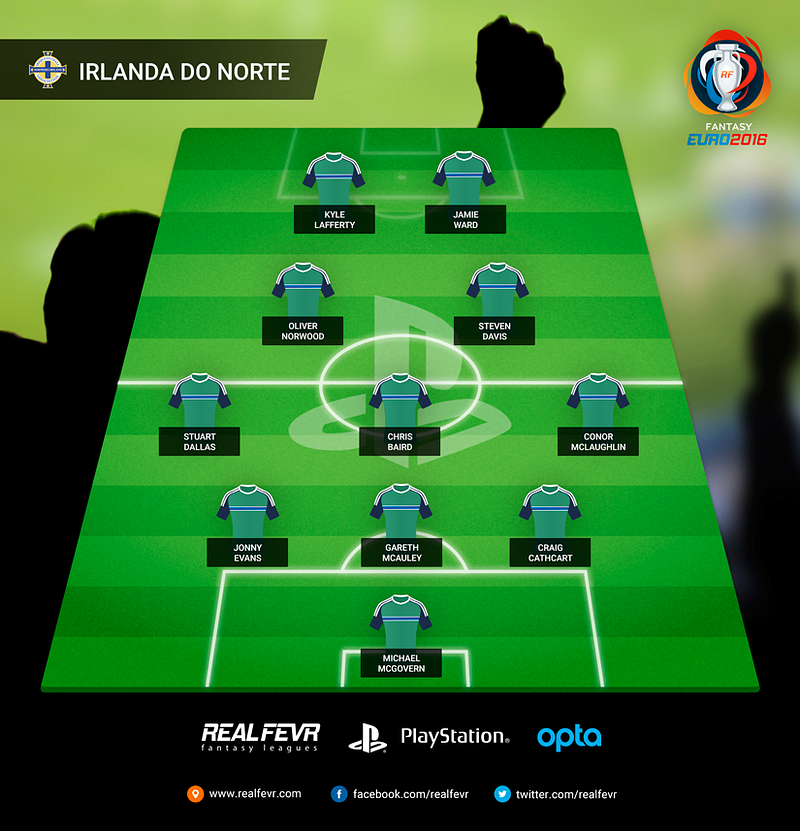
The latest scheme allows them to have on the pitch three centre-backs that play in the Premier League, bring their defense and midfield lines closer and deeper, challenging opponents to try a more sideways style of football with lots of crosses, going against the strengths of this defense.
Their midfield is hard-working with a “better break than bend” mindset, leaving the offensive expenses almost exclusively for Steven Davis. Regarded as the “creative” of the bunch, it’s in the team Captain that Irish hopes are trusted on.
Up front, Lafferty wll try to make us forget his recent times on loan from Norwich with poor to no success at all, and maintain the run of form that he has shown when playing for his country, as highlighted by 7 goals in qualifying, out of the total of 16 by Northern Ireland.
 RF EN
RF EN 