
Despite a perfect qualification (10j, 10v, 31GM, 3 GS) and always being identified as one of the teams to go far in any competition it enters, the truth is that since 1968, England has only once reached the semi-finals of a European Championship. If we combine this with the fact that only once in its history, has the England team reached that same stage of the competition playing outside the island, we conclude that success is far from guaranteed.
Roy Hodgson has alternated his tactical formation between a 4–3–3 and a 4–4–2, but looking at the final squad, which only has a real winger, the latter should be the one picked, especially since it allows the presence of Kane and Vardy simultaneously.
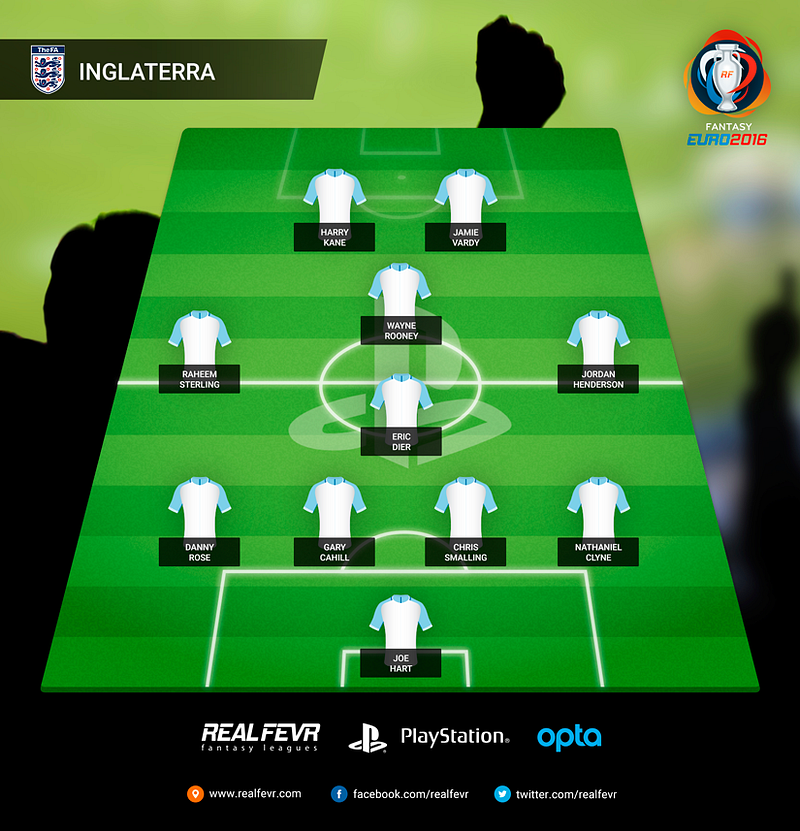
If creating chances and scoring goals should not be a problem, the same easiness is not present in the defensive area of the pitch. There are only three central defenders in the squad, and with Cahill undisputed due to the quality and experience he brings to the pitch, whether partnering Smalling or Stones, the doubt persists to the ability of the English to form a solid defense.
In the middle of the park, Dier should be the owner of more defensive, keeping up with a terrific season for the Spurs. Sterling and Rooney will be the most offensive elements going forward, responsible for carrying balls up the field and serving the two forwards. Here may lie the secret to the English success, since both Vardy and Kane, despite their undisputed skills, are more finishers that creators, and they need the game to come to them with quality.
It’s still unclear who will be the fourth element in midfield. If during qualifying, Hodgson bet mostly on Henderson, the recent friendlies and the clear commitment of England’s technical staff to a youth movement, seem to imply that it will be the young Dele Alli to snatch the opening, bringing even more creativity to the English middle.
 RF EN
RF EN 